
5 Strategies for Navigating Existential Dread & Anxiety (Happy Earth Day!)

If you feel anxious, overwhelmed, or just kind of hollow when you think about the state of the world right now, welcome. You're in good company.
Climate change. Ongoing wars. Economic anxiety. Political chaos. Attacks on LGBTQ+ communities. It's a lot. And if you're someone who feels things deeply, the weight of all of it can tip pretty quickly from "I'm concerned" into full-on existential dread.
This comes up constantly in my therapy sessions. And I mean constantly. So many of my clients have told me they feel hopeless, powerless, angry, and anxious. There’s a big, looming fear that things are never going to get better, that we’re powerless to change anything, or that nothing really matters in the face of such massive global problems. Existential dread is, unfortunately, a lived experience for many of us. (And yes, it’s showing up at parties, in group chats, and in therapy. Equal opportunity dread.)
So if you've been spiraling lately, I want you to know: you're not being dramatic, and you're definitely not alone. So at least there’s that! 🙃
What is existential dread, exactly?
Existential dread (sometimes called existential anxiety) is that bone-deep sense of fear or restlessness that comes up when we confront the bigger, scarier questions — questions about the future, about greater meaning, about things we can't control. It often goes hand-in-hand with overwhelm or hopelessness, and it’s exacerbated by the many issues going on in the world right now.
And here's the thing: our nervous systems were not built for this. We were not designed to process the suffering of the entire world in real time, 24/7, through a glowing rectangle in our hands. The combination of constant news cycles, social media, and a culture that glorifies late-stage capitalism means our brains and bodies are often stuck in a low-grade (or not so low-grade) state of fear and overwhelm.
Honestly, it might be difficult to think about "celebrating" Earth Day when the existential dread sets in. That's okay. It's important to honor those feelings. And while we may not be able to singlehandedly fix the world (ugh), we can take steps to support our mental health and stay grounded enough to keep showing up for ourselves and for the causes and people we care about.
Here are 5 strategies for coping with existential dread:
1. Focus on what you can control.
When the world feels out of control, it helps to zoom in. What's actually within your sphere of influence? Your daily habits. The people in your life. The causes you care about. Your community. Your creative work.
You might not be a policymaker or a superhero (same), but you are someone who can show up for your community, donate your time or resources to something meaningful, or just be a steady, kind presence in someone else's life. It all matters.
When things feel unmanageable on a global or societal scale, anchoring into what you can tangibly impact helps restore your sense of agency and purpose.
2. Practice gratitude (without minimizing the hard stuff).
I know. Gratitude gets a bad rap because it's been co-opted by toxic positivity culture. But practicing gratitude doesn't mean pretending everything is fine when it clearly isn't. It means making room for what's also true alongside the dread.
Yes, things might be scary and hard — but you might also have a cozy home, a funny group chat, a cat who snuggles you, or a delicious meal to look forward to. Both things can be true at the same time.
Research on gratitude consistently shows it can shift our attention out of the tunnel vision that anxiety creates and expand our perspective to include more of the full picture (the good, the bad, and the ugly). Gratitude helps us feel more resourced to deal with what’s difficult, not by denying pain, but by making room for joy and goodness too.
Try it: at the end of each day, write down three small things you appreciated. Could be as simple as a song, a meal, an interaction with nature, or the fact that your coffee was exactly the right temperature (that’s mine today).
3. Set boundaries with your media consumption.
There's a real difference between staying informed and doom-scrolling yourself into a spiral. Staying informed is intentional while doom-scrolling is compulsive, and it tends to make existential dread significantly worse without actually helping you feel more empowered. Again, our nervous systems weren’t meant to take in every tragedy and outrage happening around the world in real time. Instead, be intentional about your media diet.
Consider:
Designating specific "news hours" (example: 10 minutes on your lunch break, and then you're done)
Unfollowing accounts that send you into panic mode
Taking regular social media breaks or muting triggering content
Subscribing to curated newsletters that summarize the news in a less catastrophizing way
Try a few different tactics and notice how you feel with each one instead of just letting the algorithm decide how anxious you should be today. Remember, boundaries are an act of self-preservation.
4. Make space for real conversations.
One of the most underrated tools for coping with existential dread is also the most obvious: talking about it. Like, actually naming what's going on — the fear, the grief, the rage, the helplessness — instead of just carrying it silently or compulsively checking the news in search of... something.
We're not meant to hold this alone. Find people (maybe friends, a therapist, a community group) who can sit in the complexity with you without rushing to fix it or silver-lining it into oblivion. Sometimes being witnessed in your existential spiral is exactly what helps it soften a little.
5. Reconnect with whatever gives your life meaning.
In times of fear and uncertainty, coming back to what gives your life meaning can be incredibly grounding. This might be your values, spirituality, creative expression, nature, relationships, or even your sense of humor (dark humor totally counts as a coping strategy, by the way). And, of course, this looks different for everyone.
Ask yourself:
What gives me a sense of purpose?
What helps me feel connected to something bigger than myself?
When do I feel most like myself?
Then make time for whatever brings you that feeling, even in small doses. It doesn't solve the world's problems. But it does help you stay rooted in your own integrity and resilience, which is exactly what the world needs more of right now.
Remember: even when things feel hopeless, you are not powerless.
We can't control most of what's happening out there. That's unfortunately just true. But we do have some power — to care, to connect, to act, to rest, to heal, to create, and to keep showing up in ways that matter. I tell clients often: we may not have control over every situation, but in every situation, we have at least some control.
If existential dread has been sitting heavy on you lately, I hope this helps even a little. Take care of yourself. The world needs you here and in one piece.
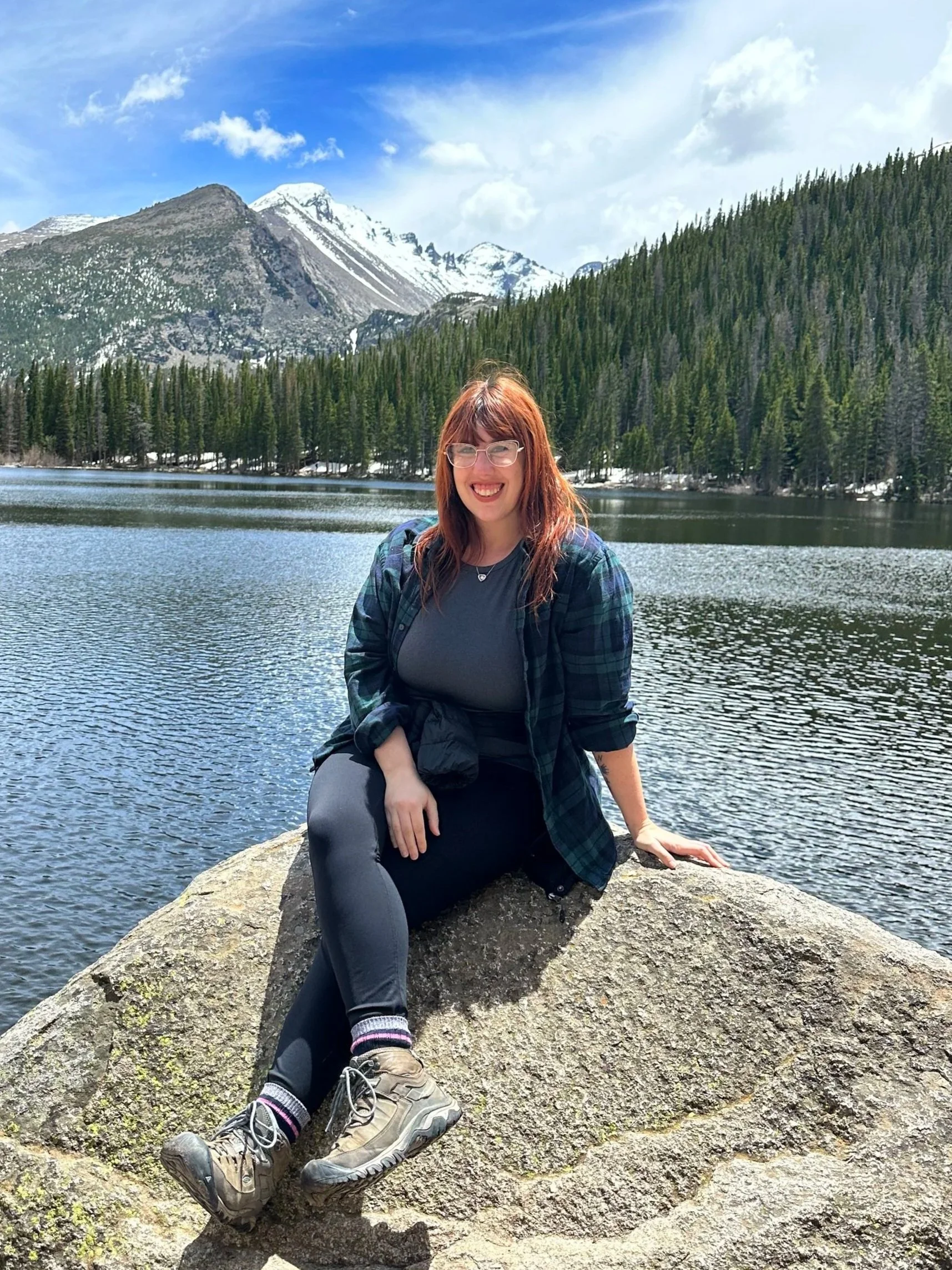
Hi, I’m Laura (she/her), a licensed anxiety and trauma therapist.
I provide holistic online therapy in Los Angeles and across California, serving anxious people-pleasers, high achievers, and neurodivergent adults who are ready to explore themselves deeply and live a fuller, more meaningful life. I work with folks navigating anxiety, trauma, neurodivergence, LGBTQIA+ identity, and challenging relationships.
By integrating both experiential and evidence-based techniques, such as ACT, EMDR, Brainspotting, IFS, and mindfulness, I provide therapy that addresses the mind, body, and soul. My goal is to help you feel less anxious, heal from painful past experiences, and find your way back home to yourself.
Learn more about me here!