7 Tips to Tackle Social Anxiety (& Make New Friends as an Adult)

Humans are social creatures. We crave togetherness, belonging, and acceptance, and yet, the older we get, the harder it seems to be to keep an effective social circle.
As children, it's often easier to make and maintain friendships.
There's the proximity bias of having repeated close contact in classes or extracurricular activities, plus the generally lower standards of youthful friendships (no shade here — my only criteria for friends in my teens was whether I thought they'd be fun to hang out with after school, whereas now I care about whether they voted for someone trying to take away basic human rights, ya know?)
Making friends as an adult, then, can be a daunting and challenging task. What if all your coworkers are 20 years older than you? What if you're too busy to go to events where you could meet people? What if you choke up every time you have to instigate a conversation? What if you vibe with someone at a party and then find out their politics are soooo off from yours? (Full disclosure: all of these things have happened to me.)
For folks navigating social anxiety on top of busy schedules, it can be especially difficult to create and maintain meaningful relationships as an adult.
So, how can you begin to tackle your social anxiety? Let’s talk about 7 different ways to do this…
1. Acknowledge your triggers.
Anxiety impacts everybody differently, so it's important to know what causes you to stress about a social situation. Once you start noticing your triggers, you gain a better understanding of which situations, thoughts, and behaviors make your anxiety worse. And, of course, this awareness helps you better equip yourself for them. For example, as a natural extrovert, I'm totally fine approaching random people at social events and striking up a conversation. But I get super anxious about being watched while I'm trying to do something. So I've learned to keep my eyes focused on a particular target, or keep something in my pocket to fidget with, so I don't get as distracted by the anxiety.
2. Challenge negative thought patterns.
Most of the time, thoughts are automatic. Something happens, your brain interprets it in some way (usually based on past experiences or beliefs), you experience an emotional response based on that story, and as a result, you behave in some way. The problem is that these thought patterns are often based on assumptions or distorted interpretations of events, which makes them inaccurate and unhelpful. It's common to simply assume your thoughts are true, but it's important to challenge the validity of your negative thoughts so you can land on a more realistic, and ultimately more helpful, perspective.
For example, you might think someone will judge you if you say the wrong thing or do something awkward. The reality, though, is that most people are so absorbed in their own lives that they aren't actually paying you any attention. And even if something a little embarrassing did happen… we all make mistakes, and everybody knows that. Reminding yourself of this can be a genuinely helpful tool in building the confidence to put yourself out there.
If you struggle with negative thinking, check out my FREE guide, Reroute Your Thoughts!
3. Practice mindfulness & grounding strategies.
Anxiety isn't just a cognitive process — it exists in the body, too. The "emotional" part of your brain (aka your limbic system, aka the part responsible for your sympathetic nervous system) gets activated when you feel anxious. Your body might think you're in a fight-or-flight situation when you're actually just trying to figure out how to talk to someone at an event because your friend disappeared. Even if you’re not in a confronting-a-bear-in-the-forest situation, your body still has a similar physiological response.
Mindfulness and grounding skills are incredibly helpful when your body is activated like this. The process of "mindfulness" or "grounding" simply refers to bringing your mind and body back to the present moment. When anxiety strikes, your brain might "time-travel" to the past (where something difficult happened) or to a perceived future (where you're afraid of some negative outcome). Sensory grounding exercises — like deep breathing, the 5-4-3-2-1 exercise, or visualization — can help your body calm down so you can stay present and respond to the situation, rather than impulsively react. Here are two to try:
4-7-8 breathing exercise: Inhale deeply for 4 counts, hold for 7 counts, then exhale for 8 counts. Repeat 2–3 times to lower your heart rate.
5-4-3-2-1 grounding exercise: Notice and identify 5 things you see, 4 things you can touch, 3 things you can hear, 2 things you can smell, and 1 thing you can taste.
(Want more ideas for mindfulness and grounding skills for anxiety? Sign up for my FREE 5 Days of Mindfulness Mini-Course!)
4. Avoid unhelpful coping mechanisms.
Avoidance is the #1 most common — and most unhelpful — coping strategy for social anxiety. Most therapists will tell you that the best approach is gradual, incremental exposure to the situations that make you anxious, so you learn how to actually navigate and cope with them. Avoidance is, after all, a boomerang. It can feel good in the moment as a quick fix, but the discomfort tends to come right back around.
Here's another thing to consider: have you ever had a drink before a social event to "take the edge off"? Remember that alcohol is a depressant, so too much of it can actually make anxiety worse. And what we don't want is a reliance on alcohol, or any other substance, to the point where you feel like you can't socialize without it.
These are just examples to get you thinking. What coping mechanisms do you lean on for social anxiety? Are they actually helpful?
5. Rehearse social skills.
Part of why so many folks lean toward avoidance as a coping mechanism is because they lack confidence that when faced with a difficult situation, they can overcome it. One of the best ways to tackle social anxiety, then, is to do the opposite: put yourself in situations where you can practice. This might be simulated with friends or family (or a therapist) first, before actually going into a real situation, and that’s okay. This process can include rehearsing anything that makes you anxious: what to say to the barista at the coffee shop, small talk ideas for parties, how to order at a restaurant, even what to do if there's an awkward moment. The more you identify language scripts to use and practice verbal and nonverbal communication, the more prepared you'll feel doing those things in real life.
6. Gradually expose yourself to anxiety-provoking situations.
I discussed this earlier, but this is an important part of the process. I recommend working with a therapist for this part, but there’s plenty of ways to do this on your own! If you'd like to work up to socializing in a big crowd of strangers, for example, how can you break that down into gradual steps? Maybe the first time, you bring a trusted friend as a buffer. Maybe the next time, you go alone but only try talking to one or two people. Practicing in lower-stakes situations helps you build confidence and work up to whatever your eventual goal is.
7. Acknowledge what you do well.
The brain typically skews negative and it can hyperfixate on alllll the things we feel like we did wrong. It's important to look for small wins and silver linings as you practice social skills and navigate social anxiety. Even if you did or said something that you feel awkward about, challenge yourself to notice anything that you might have done or said that went well. Maybe your joke landed perfectly and everyone laughed. Maybe you found a common interest with someone and got a real conversation going. Maybe you can just be proud of yourself for trying something scary. It’s crucial to acknowledge these moments because it helps challenge any beliefs you may have about your social skills, abilities, or worthiness. Every step, no matter how small, is a step toward the change you want to see!
Once you're able to navigate social situations with a bit more ease, you can start exploring new ways to create and maintain social connections. Without the natural proximity bias of youth, it can be hard to know where to start.
How to Make New Friends as an Adult
Go to events that align with your interests (for example, dance socials or open mic nights)
Join a local group (for example, a church choir, hiking meetup, or book club)
Find a local watering hole (like a bar, bookstore, or coffee shop) to frequent and get to know the regulars
Join a community sports league in your area
Check whether your city has a local Facebook group
Find a local organization to volunteer at
Strike up conversation at the gym or your favorite workout class
Sign up for a class (like a cooking class, a language course, or leadership skills class)
Leverage your existing social circle to meet new people
Get on the apps (Bumble BFF, anyone?)
Swipe through your contacts and send a simple check-in to someone you haven't talked to in a while
Become a regular at something (the same yoga class, the same farmers market stall, the same trivia night, etc)
Host something low-stakes (a potluck, a game night) instead of waiting to get invited to one
Say yes to the casual invite you'd normally talk yourself out of ("we should grab coffee sometime" — actually follow up on that one)
Look into local Meetup.com groups for your specific niche interests, however random they are
It can be challenging to make new friends and build meaningful relationships as an adult, but you can make new connections and build lasting bonds — even with social anxiety.
So go out there, be kind, and connect with other like-minded people. You've got this!
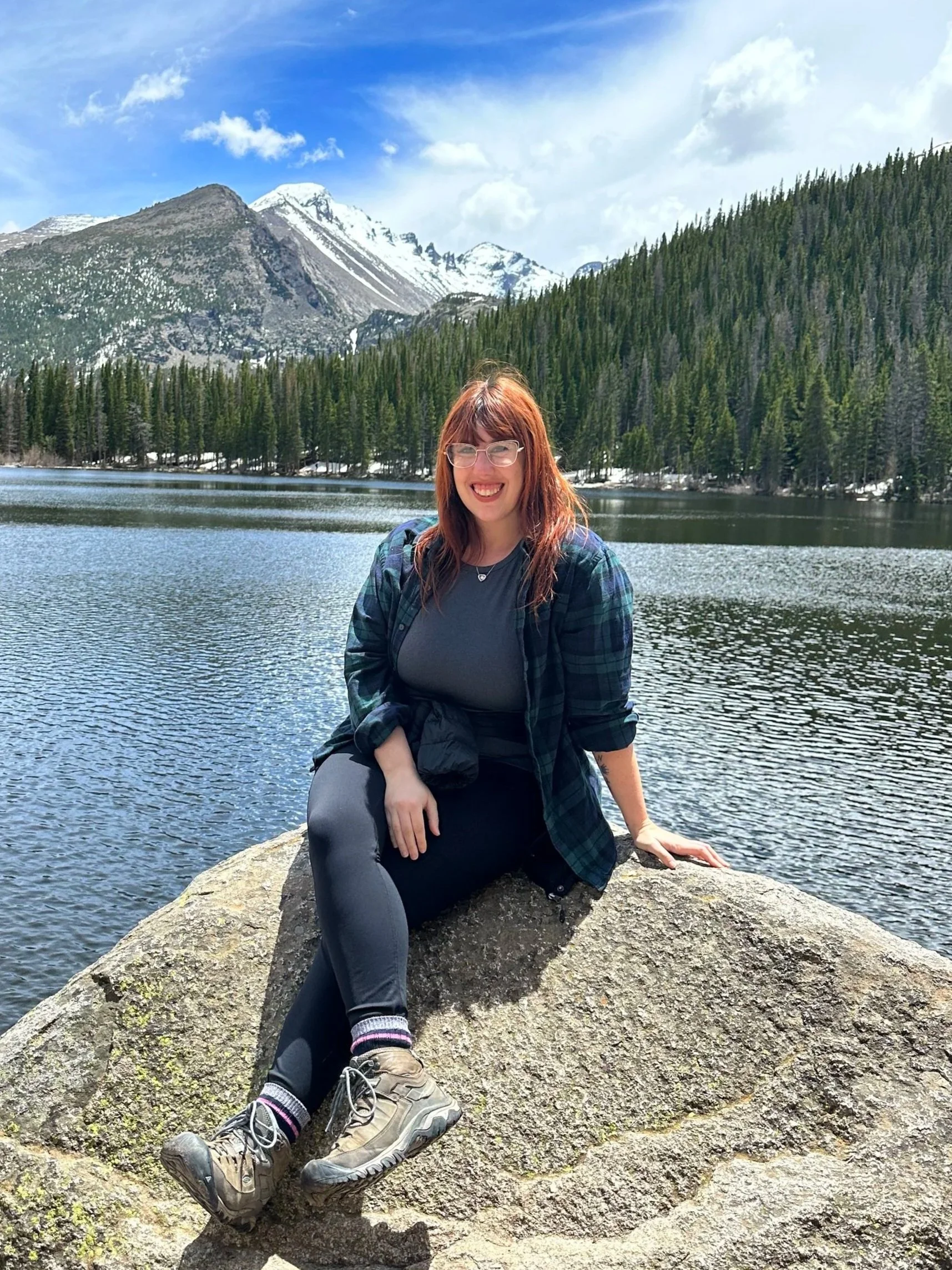
Hi, I’m Laura (she/her), a licensed anxiety and trauma therapist.
I provide holistic online therapy in Los Angeles and across California, serving anxious people-pleasers, high achievers, and neurodivergent adults who are ready to explore themselves deeply and live a fuller, more meaningful life. I work with folks navigating anxiety, trauma, neurodivergence, LGBTQIA+ identity, and challenging relationships.
By integrating both experiential and evidence-based techniques, such as ACT, EMDR, Brainspotting, IFS, and mindfulness, I provide therapy that addresses the mind, body, and soul. My goal is to help you feel less anxious, heal from painful past experiences, and find your way back home to yourself.
Learn more about me here!